
Systematic review
The effect of preoperative natriuretic peptide testing on outcome in vascular surgery: a systematic review and meta-analysis
Imperatore G,1 Bradley N,2 Hanna L,2 Gudgeon J,3 Chong P4
Plain English Summary
Why we undertook the work: Patients undergoing vascular surgery are at risk of heart-related complications after their operation. B-type natriuretic peptide (BNP) is a substance released by the heart when it is under stress. We wanted to understand if measuring BNP levels before surgery can help predict which patients are more likely to experience heart problems or death after their vascular procedure, and if it adds value to the standard tests currently used by surgeons.
What we did: We performed a systematic review, which is a comprehensive and structured search of medical databases to gather all existing research on this topic. We also conducted a meta-analysis, a statistical method used to combine the results of these individual studies to get a clearer, single overall answer. Through this process we evaluated patients undergoing both elective (planned) and emergency (urgent) vascular surgery. We collected and compared data from these studies to determine how well BNP levels predict postoperative heart events such as heart attack, death or prolonged hospital stay.
What we found: Our review included 11 studies involving 3,062 patients. We found that elevated preoperative BNP levels are significantly associated with a higher risk of major heart-related complications and death following vascular surgery. Natriuretic peptide testing appears to provide additional prognostic information that traditional risk assessment tools might miss.
What this means: Measuring these heart markers before surgery is a simple, quick and helpful way to find patients who are at a higher risk of having heart problems around the time of their operation. However, there is currently no single, universally agreed-upon cut-off value to define ‘high risk’, as different hospitals and studies use widely varying threshold numbers. By using this test, doctors can keep a closer eye on high-risk patients and better prepare for their surgery. This ultimately helps to make the operation safer, prevent heart issues and improve patient recovery.
Abstract
Objective: The aim of this systematic review and meta-analysis was to evaluate the prognostic utility of natriuretic peptide testing for predicting adverse postoperative outcomes in patients undergoing vascular surgery, and to assess their incremental value within established perioperative risk stratification frameworks. Specific endpoints included mortality, myocardial infarction, stroke and prolonged hospitalisation. A secondary objective was to determine whether natriuretic peptide testing offers incremental prognostic value over conventional risk assessment tools.
Methods: A systematic review and meta-analysis was conducted in accordance with PRISMA guidelines. A comprehensive search of PubMed, Embase, Scopus and the Cochrane Library was performed to identify studies published between 2004 and 2025 evaluating the association between preoperative B-type natriuretic peptide (BNP) levels and postoperative outcomes in adult vascular surgery patients. Eligible studies included randomised controlled trials, cohort studies and case–control studies. Two reviewers independently conducted data extraction and quality assessment. A random-effects meta-analysis was performed and subgroup analyses were conducted based on patient characteristics and procedure type.
Results: Eleven studies including 3,062 patients were included in the systematic review. All included studies were observational (prospective or retrospective cohorts). Most studies reported a significant association between elevated preoperative BNP levels and increased risk of perioperative cardiac complications including myocardial infarction, myocardial injury and cardiac death. Several studies also suggested an association with short-term mortality, although mortality-specific data were limited. Five studies reporting multivariable-adjusted odds ratios were pooled. Elevated preoperative BNP levels were associated with a significantly increased risk of perioperative cardiac events (pooled OR 4.08; 95% CI 3.20 to 5.20; p<0.001). No significant statistical heterogeneity was observed (I²=0%). The magnitude and consistency of association support integration of natriuretic peptide testing within multimodal perioperative risk pathways in vascular surgery.
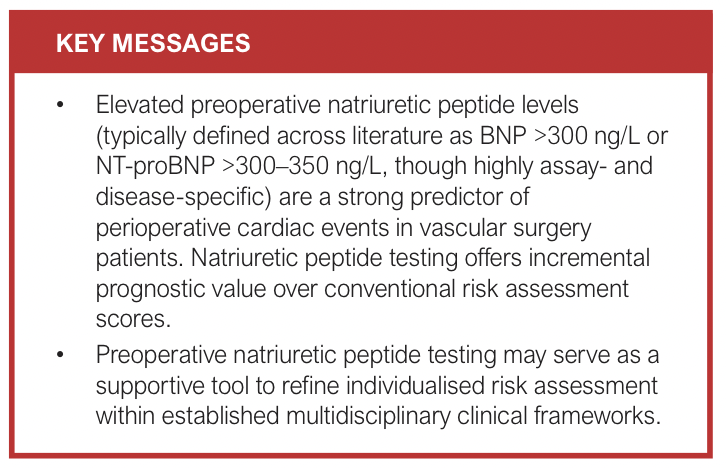
Conclusions: Elevated preoperative BNP levels are consistently associated with an increased risk of perioperative cardiac complications across observational studies in vascular surgery patients. Meta-analytical pooling confirms a strong and robust association, indicating approximately a fourfold higher risk among patients with elevated natriuretic peptide levels. The magnitude and consistency of the association support integration of natriuretic peptide testing within multimodal perioperative risk pathways in vascular surgery. Natriuretic peptide testing provides incremental prognostic information beyond traditional risk factors and may support individualised perioperative risk stratification. However, prospective validation and randomised trials are required before routine clinical implementation can be recommended.
Introduction
Vascular surgery includes a wide range of procedures addressing disorders of the vascular system, such as atherosclerosis, aneurysms and peripheral arterial disease. These conditions often require interventions including revascularisation procedures and aneurysm repair. Patients undergoing vascular surgery frequently present with multiple comorbidities, particularly cardiovascular disease, which increases perioperative complexity and significantly influences postoperative outcomes.1,2
The majority of vascular surgical procedures are considered high risk, typically due to either the magnitude of the physiological insult caused by intervention (such as aortic aneurysm repair), or due to the typical burden of comorbidity in patients undergoing intervention (such as revascularisation for peripheral arterial disease). Effective preoperative assessment in this setting allows for potential optimisation, or selection of patients towards less invasive options for intervention. The optimal strategy for preoperative assessment in this context remains challenging and has been the subject of extensive research. Conventional measures including bedside assessment and the use of scoring systems such as the American Society of Anaesthesiologists (ASA) classification, the Clinical Frailty Score (CFS) and the Revised Cardiac Risk Index (RCRI) have been widely reported; however, they include an element of subjectivity. Functional physiological testing such as Cardiopulmonary Exercise Testing (CPEX) is widely performed, and may offer a reasonable prediction of the physiological response to major surgical insult. Perioperative major cardiovascular event rates in high-risk vascular procedures may exceed 10–15%, underscoring the need for improved preoperative risk discrimination. In order to augment these strategies as part of a multimodal assessment, there is a growing interest in the use of biomarkers as quantifiable measures of perioperative risk.
Among these, B-type natriuretic peptide (BNP) has received considerable attention. BNP is a hormone produced by cardiac myocytes in response to myocardial stretch and increased ventricular pressure, conditions typically associated with heart failure and other forms of cardiovascular dysfunction.3,4 Elevated BNP levels are widely recognised as markers of heart failure severity and are routinely used for diagnosis and prognostication in heart failure patients.4 Typically, values <100 ng/L are considered normal, those >400 ng/L are considered high risk for cardiac failure, and those between 100 and 400 ng/L require clinical assessment and warrant further investigation.
However, it is critical to recognise that natriuretic peptide levels are not entirely specific to heart failure. Circulating levels are frequently elevated by non-cardiac factors common in vascular patients such as advancing age, renal impairment, sepsis, tachycardia and chronic lung diseases, whereas they can be falsely decreased by obesity or suppressed by cardiac medications like diuretics and beta-blockers. Consequently, an elevated preoperative value may reflect these combined clinical confounders rather than isolated cardiac failure, underscoring why absolute thresholds must be interpreted with caution.
Emerging evidence suggests that BNP may also serve as a valuable biomarker for assessing cardiovascular risk in patients undergoing vascular surgery.5,6 In this context, elevated preoperative BNP levels have been associated with adverse outcomes including increased mortality, prolonged hospital stays and higher complication rates.7,8 Assessing BNP levels before surgery could therefore aid in identifying patients at higher cardiovascular risk who may benefit from intensified perioperative monitoring and management.4 Surgical stress, fluid shifts, sympathetic activation and perioperative haemodynamic instability may unmask subclinical myocardial dysfunction, which natriuretic peptides are uniquely positioned to detect.
When discussing natriuretic peptides, it is clinically essential to differentiate between BNP and NT-proBNP. Both biomarkers originate from the cleavage of the common precursor proBNP, which is released by cardiac myocytes in response to myocardial wall stretch. However, they exhibit fundamentally different physiological profiles, clearance pathways and circulating half-lives. BNP is a biologically active hormone with a short half-life of approximately 20 minutes, cleared rapidly from the plasma via receptor-mediated degradation and neutral endopeptidases. Conversely, NT-proBNP is a biologically inactive N-terminal fragment with a significantly longer half-life (around 120 minutes), exhibiting higher stability in vitro and relying primarily on renal clearance. Consequently, NT-proBNP has seen increased adoption in modern clinical settings, and more recent literature frequently uses it as the primary measure of cardiac stress. Furthermore, because of these metabolic differences, absolute clinical cut-off thresholds vary dramatically between the two assays (with NT-proBNP levels typically being significantly higher than BNP levels for equivalent degrees of cardiac dysfunction). Given their shared pathophysiological pathway as indicators of subclinical myocardial stretch, pooling data from both assays under the unified category of ‘natriuretic peptides’ is clinically justified to maximise the volume of evidence, provided that assay-specific cut-offs are critically interpreted.
Despite this potential, the role of BNP testing in preoperative risk stratification for vascular surgery remains unclear. The use of both physiological testing and biomarkers is supported by recent guidelines for patients undergoing major surgery;9 however, this is not represented in all guidance.10 Although some evidence from various surgical specialties supports its prognostic value, there is no consensus regarding its utility specifically in vascular surgery, due to heterogeneity in study designs, patient populations and outcome measures across studies.8,11,12 This has led to conflicting findings regarding whether BNP testing should be routinely incorporated into the preoperative evaluation of vascular surgery patients and whether it offers incremental value over traditional risk assessment methods.7 Given these uncertainties, a systematic evaluation of the existing evidence is warranted to clarify the role of BNP testing in improving clinical outcomes in patients undergoing vascular surgery. Traditional indices such as the RCRI demonstrate limited discrimination in contemporary vascular surgery cohorts, particularly in patients undergoing major aortic procedures.
This systematic review and meta-analysis aims to evaluate the available evidence on the prognostic utility of preoperative BNP testing in patients undergoing vascular surgery. Specifically, this study seeks to:
• Assess the association between elevated preoperative natriuretic peptide levels and perioperative and postoperative cardiac complications including myocardial infarction, myocardial injury and cardiac death.
• Examine the relationship between preoperative BNP levels and short-term mortality, where reported.
• Evaluate the incremental value of natriuretic peptide testing when integrated into established perioperative risk stratification and management frameworks.
• Describe the range and methodological basis of BNP/NT-proBNP threshold values used to predict adverse outcomes in vascular surgery populations.
Through a comprehensive synthesis of available evidence, this review aims to clarify the clinical relevance of preoperative natriuretic peptide testing and to inform future research on its potential role in perioperative risk assessment and management in vascular surgery.
Methods
Review design
This systematic review was conducted in accordance with the PRISMA 2020 guidelines13 and was registered on the PROSPERO database (ID 1102118). A comprehensive search of the literature was conducted to evaluate the utility of preoperative BNP testing in predicting outcomes in vascular surgery patients. The review includes studies that assess the association between BNP levels and postoperative complications such as mortality, stroke, myocardial infarction and prolonged hospitalisation. Studies reporting preoperative BNP testing in relation to vascular surgery outcomes were considered for
Inclusion and exclusion criteria
To ensure that only relevant studies were included in the review, the following inclusion and exclusion criteria were applied:
Inclusion criteria:
• Studies that assess the impact of preoperative natriuretic peptide testing (either BNP or NT-proBNP) in patients undergoing vascular surgery (e.g., aortic aneurysm repair, carotid endarterectomy, lower extremity bypass).
• Studies involving adult patients (>18 years) undergoing elective or emergency vascular surgical procedures.
• Studies that report preoperative BNP or NT-proBNP levels measured pre-operatively and outcomes such as mortality, cardiovascular events (eg, stroke, myocardial infarction) or length of hospital stay.
• Randomised controlled trials (RCTs), cohort studies and case–control studies.
Exclusion criteria:
• Studies that do not measure BNP preoperatively or do not report relevant postoperative outcomes.
• Studies focusing on non-vascular surgery patients or paediatric populations.
• Studies that do not provide sufficient data for statistical analysis (eg, missing data on BNP levels or outcomes).
Search strategy
A comprehensive literature search was performed across multiple electronic databases, including PubMed, Cochrane Library, Scopus and Embase. The search strategy was designed to identify studies published up until 2025. Keywords and medical subject headings (MeSH) terms related to “BNP”, “pre-operative testing”, “vascular surgery”, “outcome” and “mortality” were used in the search. Examples of the search terms included:
• “B-type natriuretic peptide” OR “BNP” OR “N-terminal pro-b-type natriuretic peptide” OR “NT-proBNP” OR “natriuretic peptides”
• “vascular surgery” OR “vascular intervention” OR “vascular procedures”
• “pre-operative assessment” OR “preoperative”
• “outcome” OR “complication” OR “mortality” OR “stroke” OR “myocardial infarction”
The search was limited to studies published in English.
Data extraction
Data extraction was performed independently by two reviewers. Discrepancies were resolved through discussion or consultation. The following information was extracted from each included study:
• Study characteristics: first author, year of publication, study design, study setting and sample size.
• Participant characteristics: patient demographics (age, sex), baseline cardiovascular risk factors and major comorbidities.
• Procedural characteristics: type and complexity of vascular surgery performed.
• Biomarker assessment: BNP measured, assay method, timing of preoperative measurement and study-specific threshold values.
• Outcomes: perioperative and postoperative cardiac complications (including myocardial infarction, myocardial injury and cardiac death), and short-term mortality when reported.
• Effect estimates: adjusted and unadjusted effect measures (odds ratios, hazard ratios or relative risks) with corresponding confidence intervals, and variables included in multivariable models.
• Risk of bias and study quality: methodological quality assessed using the Newcastle–Ottawa Scale (NOS).
Quality assessment
The quality of the included studies was assessed using the Cochrane Collaboration Risk of Bias tool14 for RCTs and the NOS15 for cohort and case–control studies. These tools evaluate the risk of bias across various domains, including selection bias, performance bias, detection bias and reporting bias. Each study was classified as having low, unclear or high risk of bias. The overall quality of evidence was summarised using the Grading of Recommendations Assessment, Development, and Evaluation (GRADE) system.16
Data synthesis
The extracted data were synthesised using both qualitative and quantitative methods. For studies that provided comparable data, a systematic review was conducted to assess the pooled effect of preoperative BNP testing on postoperative outcomes. Statistical analysis was performed using Review Manager (RevMan) software (Version 5.4, Cochrane Collaboration). For continuous outcomes (eg, length of stay), the mean difference (MD) with 95% confidence intervals (CI) was calculated. For dichotomous outcomes (eg, mortality, stroke), the odds ratio (OR) with 95% CI was used. Statistical significance was defined as a two-sided p value of <0.05. Subgroup analyses were planned to explore whether the association between BNP levels and outcomes differed based on patient characteristics (eg, age, comorbidities) or surgery type.
Meta-analysis
Given that the included clinical literature evaluates both BNP and NT-proBNP, we chose to pool these biomarkers under the unified term ‘natriuretic peptides’. This decision was pragmatic and pre-specified to maximise the number of eligible studies and statistical power for the quantitative synthesis. While BNP and NT-proBNP are physiologically distinct molecules with different circulating half-lives and absolute assay thresholds, both reflect myocardial stretch and subclinical ventricular dysfunction.
A random-effects meta-analysis was performed to pool adjusted ORs for perioperative or postoperative cardiac events associated with elevated preoperative BNP levels. The primary pooled endpoint was perioperative or 30-day major cardiac events. Effect estimates and corresponding 95% CIs were transformed to the logarithmic scale and combined using the generic inverse variance method. Between-study variance was estimated using the DerSimonian–Laird method.
Effect estimates were log-transformed and pooled using the generic inverse variance method within a random-effects framework (DerSimonian–Laird), with Hartung–Knapp adjustment applied due to the limited number of studies. Statistical heterogeneity was assessed using Cochran’s Q test and quantified with the I² statistic (an I² value of <25% was considered low heterogeneity). Sensitivity analyses were performed using leave-one-out procedures to evaluate the robustness of pooled estimates. Given the small number of pooled studies, assessment of publication bias was considered exploratory and interpreted with caution. Meta-regression was not feasible due to the limited number of studies.
Visual inspection of the funnel plot did not demonstrate marked asymmetry. Egger’s regression test did not identify statistically significant small-study effects (intercept=1.17, p=0.12). However, interpretation is limited by the small number of included studies (n=4), and these analyses should be considered exploratory.
All statistical analyses were conducted using Python (Version 3.14.2) with standard scientific computing libraries and Review Manager (RevMan) software (Version 5.4, Cochrane Collaboration).
Results
Study selection
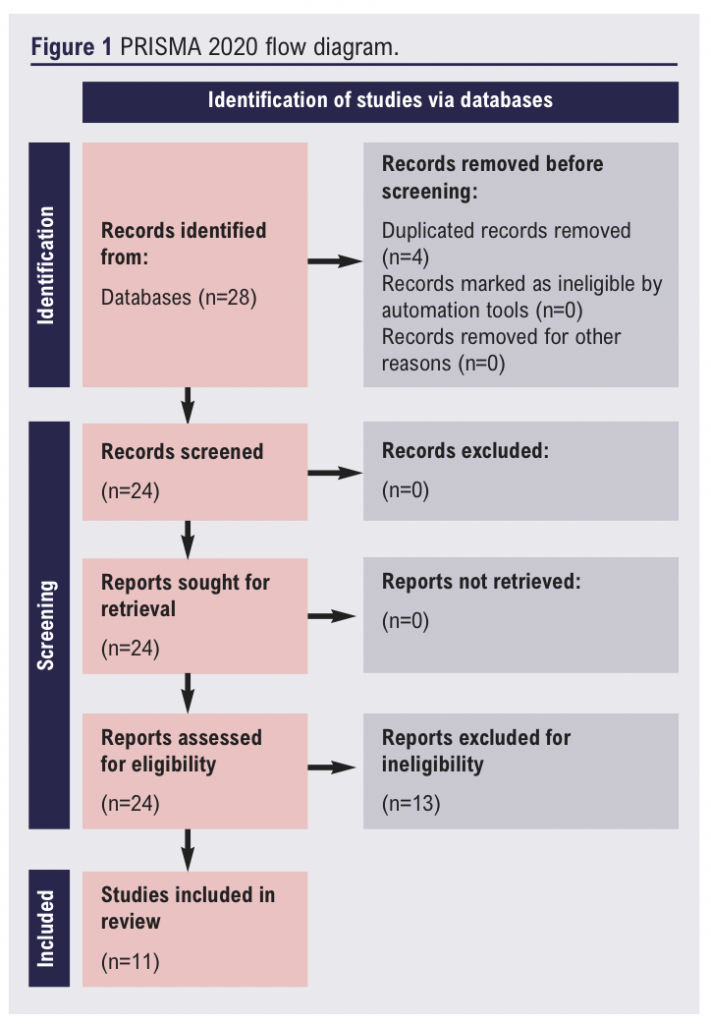
A total of 28 studies were identified through the literature search. After removing duplicates, 24 studies were screened for eligibility. Following the application of inclusion and exclusion criteria, 11 studies were ultimately included in the systematic review. A flow diagram summarising the study selection process is presented in the PRISMA flowchart in Figure 1. Reasons for the exclusion of studies at each stage of the selection process are outlined in the diagram.
Study characteristics
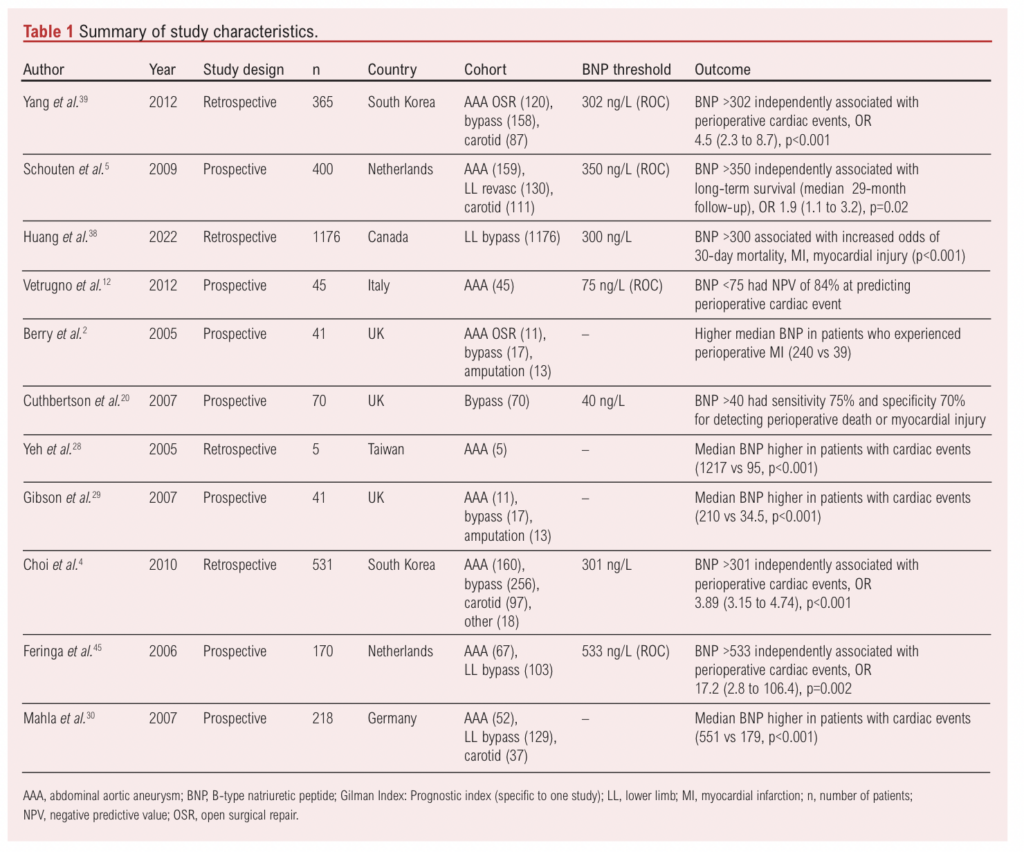
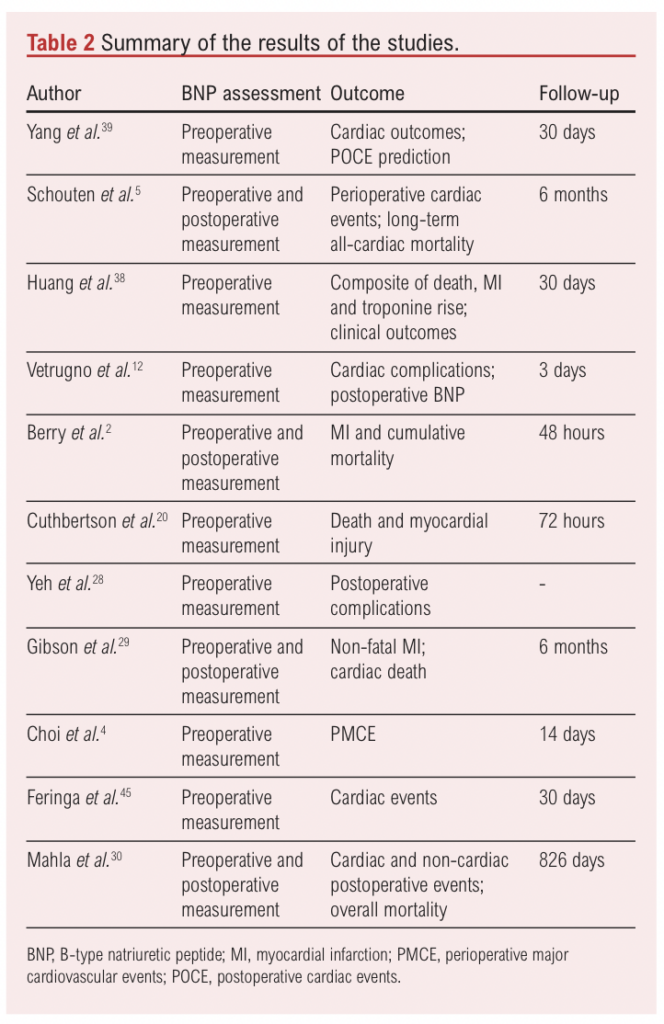
The characteristics of the included studies are summarised in Table 1. The studies were published between 2004 and 2018 and involved a total of 3062 patients with a mean age of 66–75 years. All studies were observational: retrospective (n=4, 36%) and prospective (n=7, 64%) in design. The results of the included studies are summarised in Table 2. The studies were conducted across multiple countries including South Korea, the Netherlands, Canada, Italy, the UK, Taiwan and Germany. The surgical procedures included abdominal aortic aneurysm repair, carotid endarterectomy, lower limb revascularisation or bypass surgery, and major amputations. Preoperative BNP was measured in all studies, although the threshold values varied substantially ranging from 40 ng/L to 533 ng/L and were frequently derived using receiver operating characteristic (ROC) analyses. Several studies reported median BNP values instead of fixed cut-off points. Study quality, assessed using the NOS, was generally moderate to high. However, limitations included small sample sizes in some cohorts, heterogeneity in BNP measurement protocols and incomplete adjustment for confounding variables.
Outcome measures
The most commonly reported outcomes across the included studies were: (1) perioperative and short-term mortality; (2) perioperative and postoperative cardiac events including myocardial infarction, myocardial injury and acute coronary syndromes; and (3) composite cardiovascular endpoints. Ten studies focused primarily on short-term perioperative outcomes whereas only one study evaluated long-term survival. None of the included studies systematically evaluated non-cardiac complications or length of hospital stay as primary endpoints.
Effect of preoperative BNP testing on mortality and on cardiovascular events
Three studies found that elevated preoperative BNP levels were associated with higher mortality rates following vascular surgery. Three studies showed that patients with BNP levels exceeding 100 ng/L had a significantly higher risk of 30-day and 90-day mortality. On the other hand, two studies did not find a significant association between BNP levels and mortality, potentially due to a smaller sample size or different patient population.17,18 Four studies demonstrated a positive correlation between elevated BNP levels and an increased incidence of cardiovascular events, such as myocardial infarction and stroke, following vascular surgery. For instance, one study19 showed that patients with BNP levels >50 ng/L were 2.5 times more likely to experience a stroke or myocardial infarction within 30 days postoperatively compared to those with lower BNP levels.20-23 However, there was significant variability in BNP threshold levels used across studies, contributing to some heterogeneity in the results.4,18,24
(1) Association with cardiovascular events
The majority of included studies demonstrated a significant association between elevated preoperative BNP levels and adverse cardiac outcomes following vascular surgery. Several large cohorts reported BNP as an independent predictor of perioperative cardiac events:
• Yang et al39 identified BNP >302 ng/L as independently associated with perioperative cardiac events (OR 4.5, p<0.001).
• Choi et al4 reported similar findings with a cut-off of 301 ng/L (OR 3.89, p<0.001).
• Feringa et al45 found a strong association using a higher threshold of 533 ng/L (OR 17.2, p=0.002). Two smaller prospective studies consistently showed significantly higher median BNP values among patients experiencing perioperative myocardial infarction or cardiac events compared with event-free patients. In addition, Cuthbertson et al reported that BNP >40 ng/L had a sensitivity of 75% and specificity of 70% for predicting perioperative death or myocardial injury,20 while Vetrugno et al demonstrated a high negative predictive value for BNP <75 ng/L.12 Overall, 10 of the 11 studies supported a strong relationship between elevated preoperative BNP and perioperative cardiac morbidity.
(2) Association with mortality and long-term outcomes Evidence for mortality prediction was more limited but remained consistent. Huang et al, in the largest cohort (n=1176), reported that BNP >300 ng/L was associated with increased odds of 30-day mortality, myocardial infarction and myocardial injury (p<0.001).38 Schouten et al showed that elevated BNP (>350 ng/L) was independently associated with reduced long-term survival over a median follow-up of 29 months (OR 1.9, p=0.02).5 Other studies primarily focused on cardiac events and did not report mortality separately. No study failed to demonstrate at least a trend toward worse survival in patients with elevated BNP. Thus, available evidence indicates that preoperative BNP is associated with both short-term mortality and reduced long-term survival, although mortality-specific data remain limited.
(3) Heterogeneity of BNP thresholds
A substantial clinical heterogeneity in BNP cut-off values was observed across studies, ranging from 40 ng/L to >500 ng/L. Thresholds were derived using different statistical approaches and varied according to population characteristics and outcome definitions. This variability represents a major source of clinical and methodological heterogeneity and limits the identification of a universal prognostic threshold.
Effect on length of hospital stay
Evidence regarding length of hospital stay was limited and inconsistently reported across included studies; therefore, no firm conclusions could be drawn on the association between preoperative BNP levels and hospital length of stay.2,25–27
Meta-analysis of perioperative cardiac events
Of the 11 studies included in the systematic review, five were pooled in the quantitative meta-analysis. The remaining six studies were excluded from the quantitative synthesis due to the lack of directly extractable comparable statistical data. Specifically, these studies did not report multivariable-adjusted ORs or HRs with corresponding 95% CI for perioperative cardiac events. Instead, they presented outcomes as unadjusted univariable comparisons, raw median natriuretic peptide values between event and non-event groups2,28–30 or diagnostic accuracy metrics without regression-derived effect estimates.12,20 Pooling these disparate statistical formats would introduce severe methodological bias; therefore, they were appropriately restricted to the qualitative narrative synthesis.
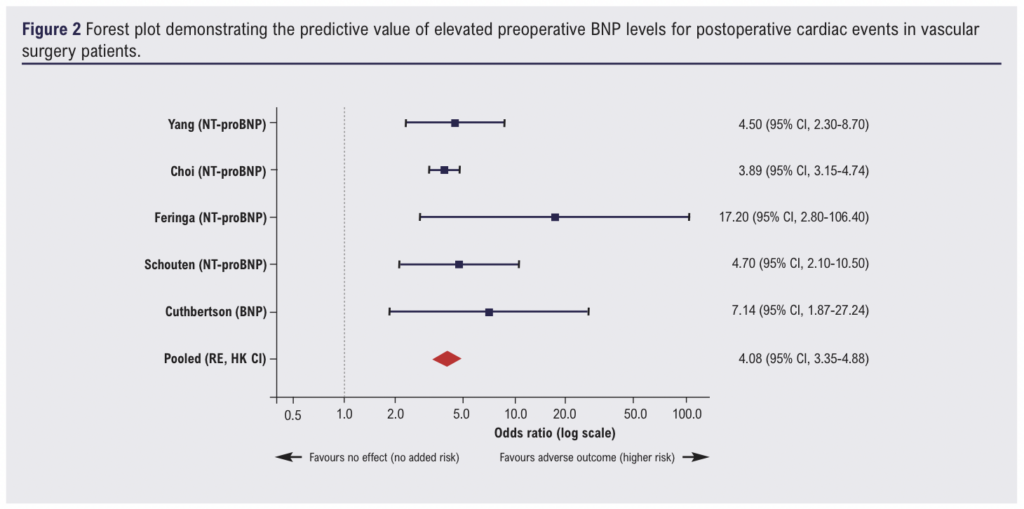
Five studies reporting multivariable ORs for perioperative or postoperative cardiac events were included in the quantitative synthesis. Using a random-effects model, elevated preoperative BNP levels were associated with a significantly increased risk of cardiac complications (pooled OR 4.08; 95% CI 3.39 to 4.92).
Hartung–Knapp adjustment confirmed the robustness of the association (OR 4.08; 95% CI 3.20 to 5.20; p<0.001). This effect size reflects a clinically meaningful amplification of perioperative cardiac risk across vascular surgery cohorts. No significant heterogeneity was observed among studies (I²=0%, Q=3.36, p=0.50). The absence of statistical heterogeneity suggests a stable prognostic signal despite variability in thresholds and populations. The results of the meta-analysis are shown in the forest plot in Figure 2.
Leave-one-out sensitivity analyses did not materially alter the pooled effect estimate, indicating that the results were not driven by any single study.
Subgroup analyses
Formal subgroup analyses were limited across the included studies, and none of the 11 studies performed fully prespecified and consistently stratified subgroup analyses. Consequently, robust assessment of effect modification by patient or procedural characteristics was not possible. Four studies adjusted for major clinical covariates including age, renal dysfunction, diabetes mellitus and heart failure and consistently found that elevated BNP levels remained independently associated with perioperative cardiac events after multivariable adjustment. This suggests incremental prognostic value beyond traditional risk factors.
However, evidence regarding differential prognostic performance across specific patient subgroups and procedural categories was largely indirect and inconsistently reported. Although some cohorts including older patients or individuals undergoing major aortic or complex revascularisation procedures reported higher effect estimates, these findings were not derived from formal stratified analyses and should be interpreted cautiously.
Overall, heterogeneity in reporting, limited stratification and inconsistent subgroup definitions preclude definitive conclusions regarding subgroup-specific risk profiles. Further prospective studies incorporating standardised and prespecified subgroup analyses are required to clarify whether the prognostic utility of natriuretic peptide varies across vascular surgical populations.
Risk of bias results
The overall risk of bias in the included studies varied. While seven studies used appropriate statistical methods, four studies were limited by small sample sizes, lack of blinding and incomplete reporting of outcomes. The methodological quality of studies assessing mortality outcomes was generally high, but studies examining complications and length of hospital stay had a moderate to high risk of bias due to unadjusted confounding factors and incomplete outcome reporting.
Discussion
This systematic review and meta-analysis shows that elevated preoperative BNP levels are strongly and consistently associated with an increased risk of perioperative cardiac complications in patients undergoing vascular surgery. The quantitative synthesis of five studies reporting multivariable effect estimates showed that patients with elevated natriuretic peptide levels had approximately a fourfold higher risk of perioperative cardiac events, confirming the substantial prognostic value of these biomarkers. Importantly, this association remained robust after Hartung–Knapp adjustment and was characterised by minimal statistical heterogeneity, indicating a high degree of consistency across studies despite differences in patient populations and surgical procedures. These findings support the biological plausibility of natriuretic peptides as markers of subclinical myocardial dysfunction and perioperative cardiovascular vulnerability.19
The findings of this review align with previous studies investigating the role of natriuretic peptide in predicting cardiovascular events in both cardiac and non-cardiac surgical populations. Numerous studies have demonstrated the prognostic value of preoperative BNP levels in forecasting postoperative complications and major adverse cardiovascular events, including among patients undergoing vascular procedures.31,32 Despite these consistent associations, the current literature remains heterogeneous and fragmented. Variability in study design, patient selection, perioperative risk profiles and outcome definitions limits the comparability and generalisability of findings across studies.19,33,34 Importantly, no prior comprehensive systematic review or meta-analysis has focused specifically on vascular surgery, a field characterised by distinct haemodynamic stresses and a high burden of comorbidities that may influence both BNP levels and postoperative risk. This gap underscores the need for focused research efforts to refine the role of BNP in this setting and to develop standardised, evidence-based guidelines for its use as a perioperative risk stratification tool in vascular surgery.34,35
Further complicating clinical translation are the notable methodological differences across studies, particularly in BNP thresholds and timing of measurement.35,36 Reported BNP cut-off values vary widely, ranging from 50 to 300 ng/L, and the timing of preoperative BNP measurement is inconsistent.35,36 The heterogenous use of cut-offs of BNP is an important limitation of the current evidence base and therefore limits the conclusions drawn in this review. Indeed, the cut-off values implemented in the studies included are not in keeping with the ESC 2022 guidelines.9 In particular, most reported cut-off values were empirically derived and were not aligned with contemporary guideline recommendations, representing a major barrier to routine implementation. Despite low statistical heterogeneity in this pooled analysis (I²=0%), important clinical and methodological heterogeneity remained. The magnitude of association observed in this meta-analysis appears greater than that reported for several individual predictors incorporated within traditional perioperative risk scores.
There is a clear gap in the evidence base which warrants further investigation in contemporary cohorts with validated cut-offs of BNP to more effectively assess the potential association between elevated BNP and perioperative outcome. Investigation of specific patient populations, such as those undergoing major vascular intervention rather than pooled cohorts, would be preferable. Such studies should also aim to determine how these biomarkers can be incorporated into perioperative management pathways specifically tailored to vascular surgery patients.37,38 Natriuretic peptide likely improves risk discrimination rather than replacing existing clinical scores. Standardisation in measurement timing, outcome reporting and adjustment for key confounders will be essential to facilitate the integration of natriuretic peptide testing into routine clinical practice and to support its use in clinical decision-making, risk stratification and postoperative surveillance in this high-risk population. Although thresholds varied widely, values in the range of 300–350 ng/L consistently identified higher-risk individuals in larger cohorts. BNP should therefore not be considered a standalone determinant of perioperative risk. Its greatest clinical value appears to lie in integration within established multimodal risk assessment frameworks, where it may refine clinical judgement, support individualised perioperative management and facilitate more targeted monitoring strategies. However, these aggregate values may be more applicable to elective abdominal aortic aneurysm populations – such as those identified through screening programmes – than to patients with chronic limb-threatening ischaemia, who frequently present with an elevated baseline due to a higher systemic comorbidity burden. Consequently, disease-specific and procedure-specific threshold values are urgently needed, and further targeted prospective work is required to establish tailored cut-offs across distinct vascular subgroups. Furthermore, it is noteworthy that our comprehensive search identified no published studies evaluating natriuretic peptide in vascular surgery between 2018 and 2025, highlighting a clear contemporary evidence gap that future investigations must address.
Additionally, the inclusion of intermediate-risk carotid surgery alongside high-stress aortic and lower limb reconstructions in some cohorts (eg, Yang et al,39 Choi et al4 and Mahla et al30) represents a potential clinical confounding factor. This variation in the magnitude of surgical insult can dilute the observed prognostic signal of preoperative natriuretic peptides on postoperative outcomes.
Strengths and limitations
Methodological and clinical strengths
This systematic review and meta-analysis is strengthened by the inclusion of multiple moderate- to large-sized observational cohorts and the consistent reliance on multivariable-adjusted effect estimates. Rather than pooling raw unadjusted data, our meta-analysis pooled adjusted ORs, which accounts for key clinical confounders and isolates the independent prognostic contribution of preoperative natriuretic peptide. Furthermore, the use of robust statistical methods, specifically the random-effects framework combined with the Hartung–Knapp adjustment, enhances the reliability, clinical interpretability and conservative nature of our pooled findings.
Limitations
Despite these strengths, several critical limitations must be addressed:
• Conflation and pooling of BNP and NT-proBNP: a key methodological limitation is the clinical pooling of BNP and NT-proBNP. The use of entirely different analytical platforms explains the massive range of study-specific threshold values. While pooling these assays was a pragmatic decision designed to maximise statistical power and compile a sufficient sample size, it prevents the determination of a universal clinical cut-off. Clinicians must interpret absolute values with extreme caution.
• The paradox of zero statistical heterogeneity: our quantitative synthesis yielded a pooled I² value of 0%. While this mathematically suggests a highly consistent prognostic direction, an I² of 0% across populations with highly variable biomarker thresholds and surgical procedures is highly unusual. This finding must be interpreted as a likely artifact of our small sample size, which severely limits the statistical power of standard tests to detect true underlying clinical and methodological heterogeneity.
• Search strategy and language bias: our search was limited to peer-reviewed studies published in the English language, which introduces a potential language and geographic bias. Second, we did not systematically search grey literature databases or clinical trial registries, nor did we perform manual hand-searching of the reference lists of included studies and previous reviews. Consequently, while the pooled effect estimate remains statistically robust, it must be interpreted within the boundaries of these literature search limitations.
• Heterogeneity in surgical stress magnitude: the clinical impact of elevated preoperative natriuretic peptides is highly dependent on the magnitude of the surgical insult. Notably, several key included cohorts such as those of Yang et al,39 Choi et al4 and Mahla et al30 included patients undergoing carotid endarterectomy alongside major aortic and lower limb revascularisations. Carotid surgery involves significantly less systemic haemodynamic stress, minimal fluid shifts and a lower systemic inflammatory response compared with open abdominal aortic aneurysm repair or distal bypasses. Mixing procedures of such vastly different physiological stress levels may have diluted or skewed the postoperative outcome measures, representing a key source of clinical confounding.
• Observational design and confounding: all the included studies were observational, leaving the results inherently susceptible to selection, residual and confounding biases. Crucial unmeasured perioperative variables – such as acute haemodynamic instability, dynamic medication adjustments (eg, beta-blockers, ACE inhibitors), patient frailty and customised anaesthetic optimisation strategies – could not be standardised and may have independently influenced both biomarker levels and clinical outcomes.
Clinical implications and future directions
Preoperative BNP testing may represent a valuable adjunct for perioperative risk stratification in patients undergoing vascular surgery. Identification of patients with elevated natriuretic peptide levels may support targeted preoperative optimisation, intensified perioperative monitoring, early cardiology consultation and individualised postoperative surveillance.
In selected high-risk patients, biomarker-informed risk stratification may also contribute to procedural planning and timing of surgery. However, natriuretic peptide testing should be integrated within comprehensive multimodal clinical frameworks rather than used in isolation, to maximize predictive accuracy and clinical utility.40,41
Future research should prioritise large prospective multicentre studies using standardised assay platforms, validated cut-off values aligned with contemporary guidelines and harmonised outcome definitions. Particular emphasis should be placed on well-characterised procedure-specific cohorts, including major aortic and complex revascularisation populations.42,43
Randomised controlled trials evaluating BNP-guided perioperative management strategies are urgently needed to determine whether biomarker-informed pathways improve clinical outcomes compared with standard care. Long-term follow-up studies should assess associations with late cardiovascular events, mortality and functional decline. In parallel, formal health economic evaluations are required to clarify the cost-effectiveness of routine natriuretic peptide testing.44 Future work may integrate natriuretic peptide measurements within machine learning-based perioperative risk models to enhance individualised risk prediction.
Finally, mechanistic studies may help elucidate the pathophysiological pathways linking elevated BNP to perioperative vulnerability, facilitating refinement of biomarker thresholds and development of targeted preventive interventions.
Conclusion
This systematic review and meta-analysis demonstrates that elevated preoperative BNP levels are strong and consistent predictors of perioperative cardiac complications following vascular surgery. Quantitative synthesis indicates that patients with elevated natriuretic peptide concentrations have approximately a fourfold increased risk of adverse cardiac events.
BNP provides meaningful incremental prognostic information beyond traditional clinical risk factors and may support individualised perioperative management in selected high-risk patients. However, substantial methodological heterogeneity and the absence of interventional evidence currently limit routine clinical implementation.
Further high-quality prospective studies and randomised trials are required before widespread adoption can be recommended. Careful evidence-based integration of natriuretic peptide testing into multimodal risk stratification frameworks has the potential to improve outcomes and optimise resource utilisation in vascular surgical practice.45
Article DOI:
Journal Reference:
J.Vasc.Soc.G.B.Irel. 2026;5(4):177-187
Publication date:
August 14, 2026
Author Affiliations:
1. Health Science Interdisciplinary Centre, Sant’Anna School of Advanced Studies, Pisa, Italy
2. Vascular Surgery Registrar, NHS KSS Deanery, UK
3. Consultant Anaesthetist, Frimley Health NHS Foundation Trust, UK
4. Consultant Vascular Surgeon, Frimley Health NHS Foundation Trust, UK
Corresponding author:
Giuseppe Imperatore
Health Science Interdisciplinary Centre, Sant’Anna School of Advanced Studies, Piazza Martiri della Libertà, 33, Pisa, 56127, Italy
Email: Giuseppe.imperatore@ santannapisa.it